 Japan
Japan 
In December 2024, several municipalities and public baths in Japan tightened their communication regarding tattoos and visiting rules in onsen and sento, partly in response to an increase in foreign visitors and misunderstandings on-site. It did not become a new national law, but it affected how clearly the rules are applied at the entrance, especially in popular areas like Hakone, Beppu, and parts of Tokyo. For those holding a Swedish passport, it is less about visas and more about understanding exactly what is expected in the bathing culture before stepping into the changing room.
Onsen are hot spring baths with mineral-rich water, often associated with ryokan or spas. Sento are traditional neighborhood baths with heated tap water. The etiquette is similar, but the atmosphere differs; sento are often more casual and local, while onsen can be more regulated and quiet.
Myth 1: All Onsen in Japan Now Allow Tattoos
Many have heard that Japan has softened its stance on tattoos and believe this applies everywhere. The reality is that each facility decides for itself, and the signage can be strict even if the tone is polite. In some areas, there are more tattoo-friendly options, but that does not mean that neighboring facilities accept the same.
If you have tattoos, you may sometimes be allowed entry if they are completely covered with bandages or patches, but this is not a right. Some public baths sell patches at the reception, while others say no outright. Call or email in advance if you are booking a ryokan, and ask directly about their tattoo policy regarding their communal baths.
Tip: Choose accommodation with a private bath, kashikiri, or rotenburo in the room if you want to avoid uncertainty.
Myth 2: A Quick Rinse is Enough Before Entering
The most common misconception in Japan is that showering is a quick formality. In onsen and sento, washing is the actual ticket to the pool. You should sit on a small stool, wash your entire body thoroughly with soap and shampoo, and rinse everything off.
Hair counts too. If you have long hair, it should be tied up so that it does not end up in the water. Many facilities have hair ties for sale, but bring your own to avoid scrambling for change at the last minute.
Once you are clean, you enter the pool without bringing soap bottles or shower heads. The water is communal and should be kept as clean as possible, even if it has a faint smell of minerals and sulfur.
Myth 3: The Towel Should Go in the Water
In Japan, two towels are often used: a small washcloth and a larger one for drying off in the changing area. The small one can be taken into the bathing area, but it should not go into the pool. Many place it on the edge or fold it and balance it on their head.
The large towel stays in the changing area. Walking around with it in the bathing area is considered clumsy and can drip on the floor, which the staff dislikes.
A trick that works in both onsen and sento is to use the small towel as a discreet cover when moving between the shower and bath, but keep it above the waterline. This way, you follow the norm and feel less exposed.
Myth 4: Onsen is Like a Swedish Spa Where You Talk and Take Photos
A quieter tone is often expected, especially in ryokan onsen. Conversations are okay but should be subdued, and mobile phones do not belong in the bathing area. Photography is almost always prohibited, even selfies in mirrors in the changing room. Staff may intervene quickly and firmly.
In sento, there may be a bit more chatter, but the focus remains on bathing and relaxation, not social media. If you want to take pictures, do so outside the entrance or in the lobby, and ask first.
Quick Table to Save You at the Entrance
| Question | Onsen | Sento | What You Do |
|---|---|---|---|
| Tattoos | Often restrictive | Varies, often restrictive | Ask in advance, bring patches |
| Washing Before Bath | Absolute requirement | Absolute requirement | Wash thoroughly while seated |
| Swimwear | No | No | Bathing is done nude, gender-separated |
| Towel in Water | No | No | Place small towel on the edge |
| Mobile and Photos | Almost always no | Almost always no | Leave mobile in the locker |
How It Works Practically When You Enter
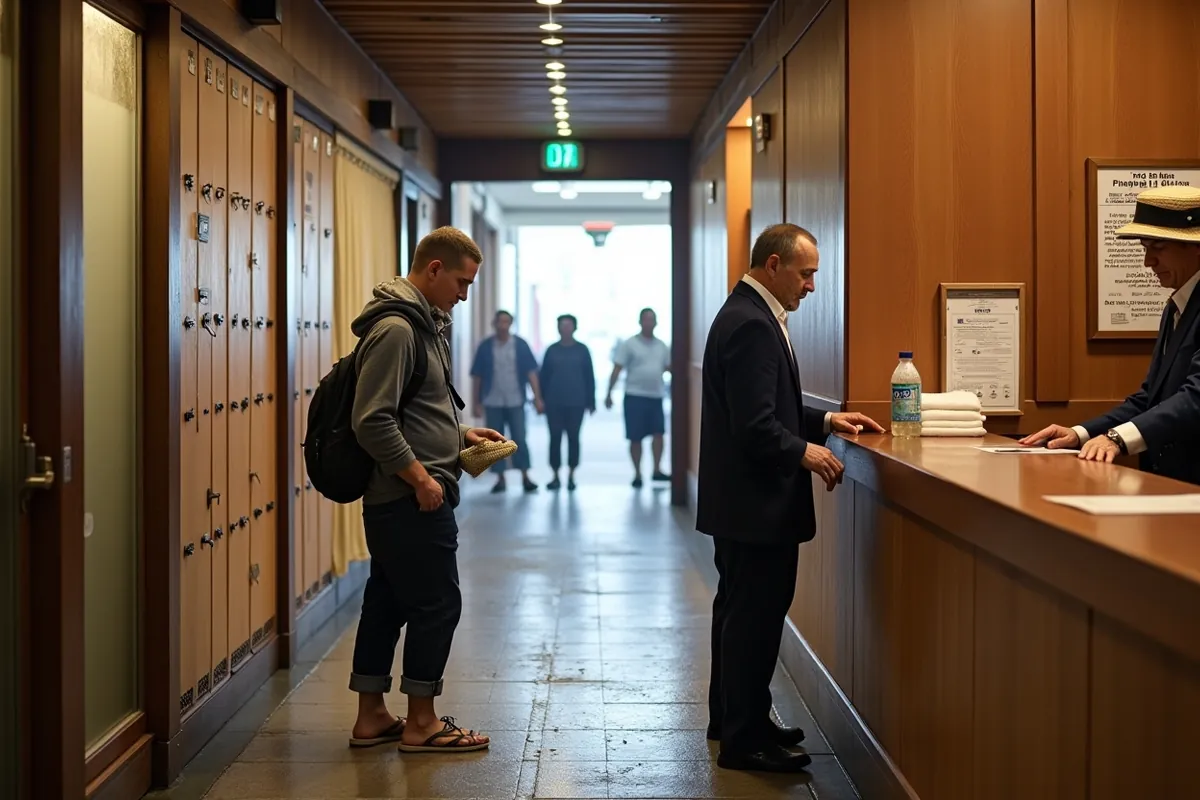
You pay first, sometimes at a machine with buttons and Japanese characters. In many sento, there are simple English words like ticket or adult, but not always. Have cash, preferably 1000 yen bills and coins, as machines and lockers may be cash-based.
When you receive a key for the locker, it is often attached to a wristband. Place everything in the locker, including your mobile. In Japan, it is common to be careful with order, so do not spread things out on benches.
Water is Really Hot
A classic shock for Swedes is the temperature. 41 to 43 degrees Celsius is common, and some local baths can be even hotter. Enter slowly, sit on the edge first, and watch for dizziness. Alcohol before bathing is a bad idea, especially after a long flight or a day of extensive walking.
The Washing Area is Your Workstation
In the washing area, you sit down. Standing and showering so that water splashes on others is perceived as careless. Rinse the stool and your area when you are done; it is a small gesture that is appreciated.
Tip: If you have long hair, tie it up before you even enter the bathing area to avoid stress at the shower stool.
Small Behaviors That Often Give Away a First-Time Visitor
There are some recurring mistakes that staff notice immediately. You do not need to be stiff, but follow the basic rhythm. Here is a short list to keep in mind.
- Wash yourself completely before the first dip.
- Do not take the towel into the pool.
- Keep your voice low and leave your mobile in the locker.
- Sit down at the shower and do not splash.
- Get out if you feel dizzy, drink water, and rest.
Health and Hygiene That Are Especially Relevant in Japan
If you have wounds, bandages, or skin infections, it is often a no, even if you think it is small. In Japan, people are cautious about shared water. If you are menstruating, the rules are clear in many places; you should not bathe in the pools.
After bathing, you may feel more tired than expected. Japanese baths are often combined with cold air, especially in outdoor baths, which affects blood pressure. Take it easy when you stand up and do not go directly out into the winter cold without drying off properly.
Transport and Timing That Enhance the Experience
In Tokyo, sento can be most relaxing later in the evening, but avoid right after work if you want more space. In onsen towns, morning baths are often quieter than evening baths, and the view may be better.
If you are traveling by train, it is smart to plan onsen visits after check-in, not between two transfers. You want to be clean, dry, and warm without rushing. Bring a small bag for damp toiletries, and if you want, save a screenshot of the facility’s rules from their website as a PDF, since signage on-site may sometimes only be in Japanese.
The Visa Question Still Comes Up When You Book
For short tourist trips, Japan is often convenient for Swedes, but rules can change, and some travelers combine their onsen trip with work, studies, or longer stays. Updated visa requirements and prices can be found at VIZA.se.
Once you are in Japan, it is rarely the passport control that causes issues, but the small social codes in the changing room. If you follow the washing routine, respect the tattoo policy, and leave your mobile behind, the onsen or sento will quickly become one of the most Japanese experiences of your trip.