 Filippinerna
In June, the Philippines began implementing stricter controls on the digital entry form eTravel, which has made an old mistake particularly costly. Many Swedes arrive with unreliable mobile networks, making both entry and onward flights unnecessarily stressful.
The most common issue I observed on-site was not the visa itself, but that people lacked a plan for connectivity, electricity, and rain. The Philippines is a country where a brief downpour can knock out power in neighborhoods, and where a boat departure can be rescheduled when the weather turns. This makes your packing more important than it is at home.
The Classic Philippines Mistake That Ruins the First Day
On many islands, especially in Visayas and Palawan, cash and battery power reign supreme. Cards often work in larger cities, but in smaller places, you quickly become dependent on ATMs, cash, and the ability to charge.
The solution is to pack for three things at once: rain that comes sideways, power outlets that vary, and mosquitoes that do not care if you are just going for dinner on the beach.
Have eTravel ready before departure and take a screenshot. When the internet is slow in Manila, it is worth its weight in gold.
Rain-Smart Packing That Works on the Islands
The rainy season varies by region, but the feeling is the same: warm, humid, and sudden downpours. A typical Swedish rain jacket can feel like a sauna.
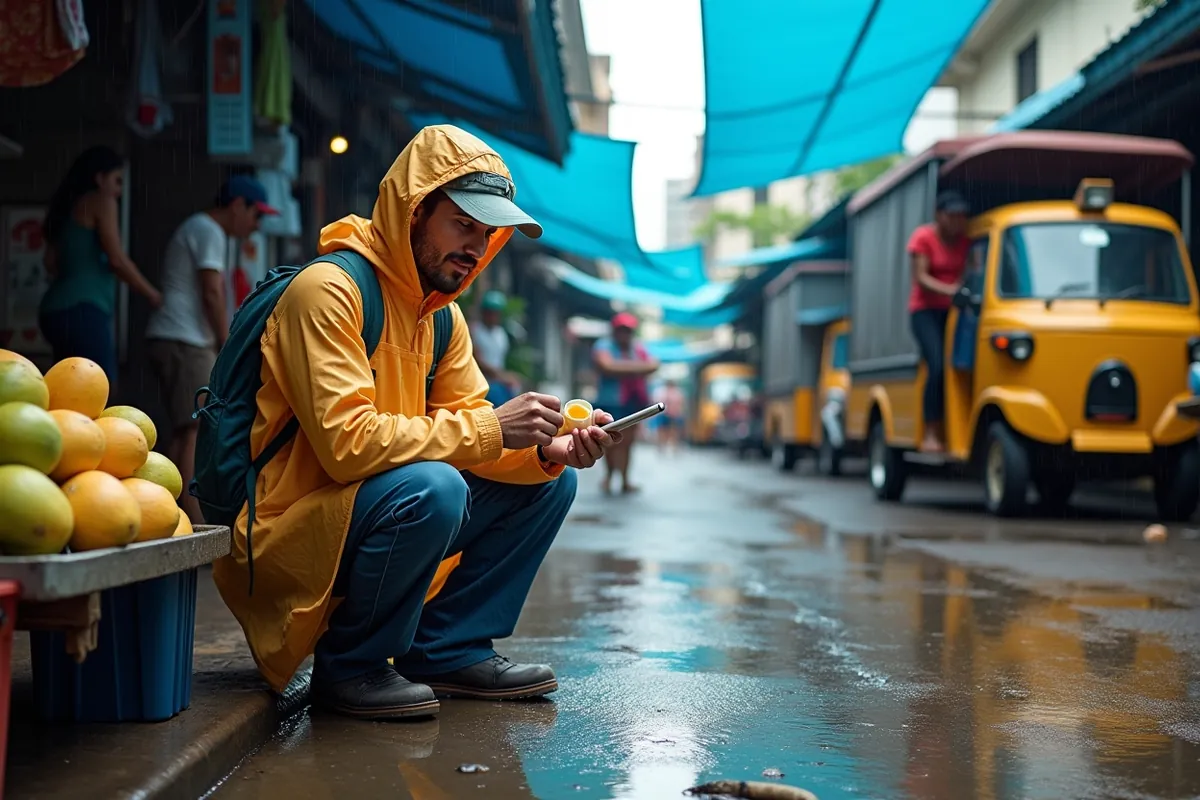
Opt for a lightweight rain jacket with ventilation and a light poncho that covers your backpack as well. I mostly used the poncho during short trips with tricycles and at ports, where you often stand still and wait.
Shoes are the next trap. Sandals are comfortable, but when the streets become slippery, you need something with grip. Bring lightweight sneakers that dry quickly, and pack them in a waterproof bag when you go by boat.
Power Outlets and Charging in the Philippines
The Philippines uses 220V, but the power outlets can be both type A and type B, meaning flat pins like in the USA. Many hotels have combination outlets, but this is far from universal.
Bring a travel adapter that supports A and B, plus a small power strip. This way, you can charge your phone, power bank, and camera simultaneously, even when the room only has one outlet.
A power bank with 10,000 to 20,000 mAh saved me several times during power outages and long boat transfers. I also had an extra charging cable, as cables tend to disappear easily in damp sand.
Expect that the power may flicker on the islands. Charge when you can, not when you must.
Mosquito Protection That Actually Works
Mosquitoes in the Philippines are not just annoying; they can carry dengue in several areas. I noticed a clear difference between just applying repellent in the evening and being consistent even in the morning.
Choose mosquito repellent with DEET or icaridin and apply it to your ankles, feet, and behind your knees. Lightweight, long pants in light colors are surprisingly comfortable in humid heat and provide extra protection.
Staying in accommodations with AC often reduces mosquitoes, but do not count on it. A small mosquito net or a portable mosquito plug can be worth the weight if you are staying in simpler places.
Money, Transport, and Small Items That Save Time
You can withdraw Philippine pesos from ATMs, but fees are common. Always have a cash buffer, especially before domestic flights, ferries, and island hopping.
For transport, a dry bag is perfect. It protects your passport, phone, and cash when getting in and out of bangka boats. I also had a small headlamp, as power outages in small towns can leave you in complete darkness.
If you need to check visa and entry regulations before your trip, updated visa requirements and prices can be found on VIZA.se.
Mini Packing List That Covers Common Mistakes
- Lightweight rain jacket and light poncho
- Travel adapter for type A and B plus a small power strip
- Power bank and extra charging cable
- Mosquito repellent with DEET or icaridin and lightweight long pants
- Dry bag for boat transfers and sudden downpours
Quick Checklist Before You Lock the Door
Below is my practical checklist for the Philippines, with items that often make a difference right from the first day.
| Area | Recommendation for the Philippines | Practical Guideline | Why It Matters |
|---|---|---|---|
| Rain | Poncho that covers backpack | 200 to 500 SEK | Downpours at ports and tricycle rides |
| Power Outlets | Adapter type A and B | 100 to 250 SEK | Outlets vary between accommodations |
| Charging | Power bank 10,000 to 20,000 mAh | 300 to 700 SEK | Power outages and long transfer days |
| Mosquito | DEET or icaridin | 80 to 180 SEK | Dengue risk in several areas |
| Cash | Withdraw in pesos and have a small buffer | 2,000 to 5,000 PHP | Cards do not always work on islands |
| Water Protection | Dry bag 5 to 10 liters | 150 to 400 SEK | Boat splashes and tropical rain |
When you have these pieces in place, the Philippines becomes much easier. Then you can focus your energy on what really matters: sunsets, food markets, and that last boat out to a beach that feels like a secret.