 Sverige
Ready to apply for a visa to Sverige?
Start your order online in a few minutes. We guide you step by step until your Sverige visa is ready.
Order Sverige visa2,000+ approved applications
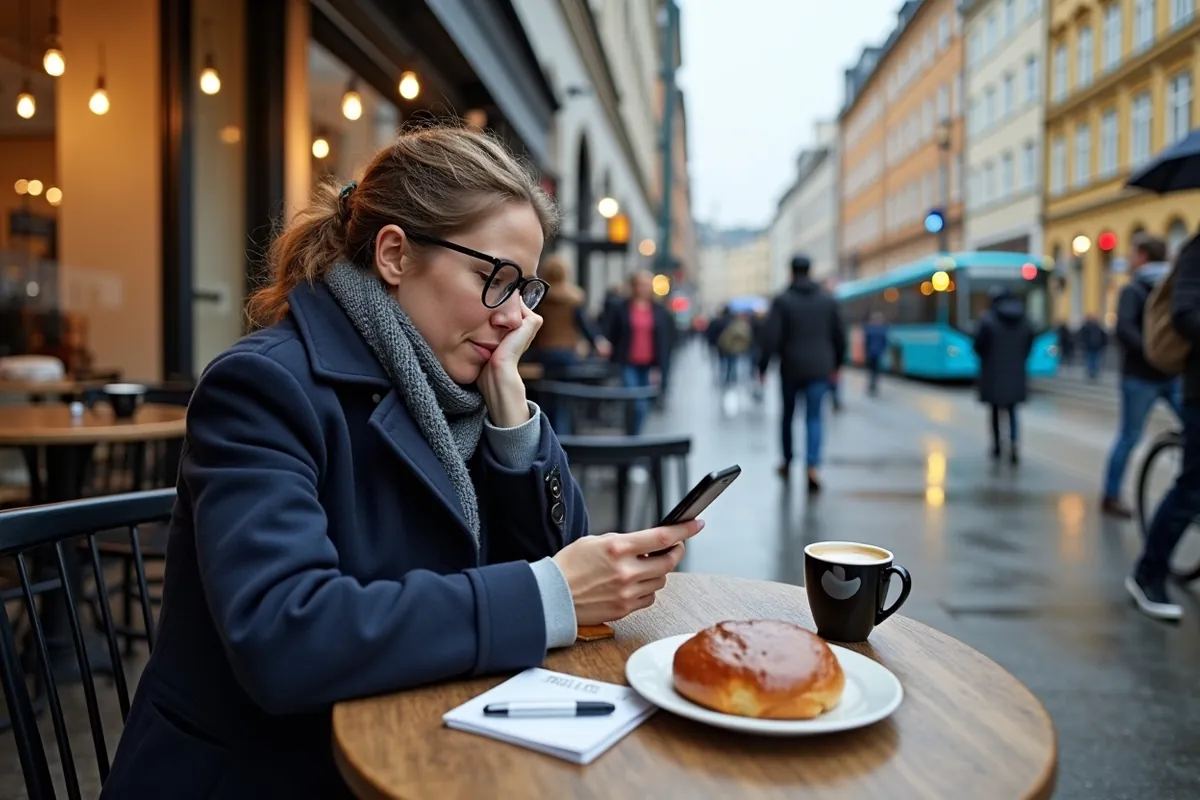
The first time I tried to pay for a coffee in Stockholm with a hundred kronor bill, I received a polite response from the barista: unfortunately, we do not accept cash. It was not a big deal, but it says a lot about how Sweden operates in practice. Cash is not banned, but in many everyday situations, it simply is not an option.
The most common problem for visitors in Sweden is therefore not the exchange rate, but that payment gets stuck when the store, museum, or bus only accepts cards or mobile payments. This often occurs when you have planned as you would in other countries, with a bundle of bills for small purchases, restrooms, and fast food. In Sweden, that plan can fall apart on the very first day.
Why Sweden Feels Truly Cashless
Sweden has long had a high usage of cards, and many businesses have switched to card and digital payments to reduce the risk of robbery and cash handling. The result is that signs saying Cashless or We do not handle cash are common, especially in larger cities and places with high foot traffic.
The Riksbank describes that cash usage in Sweden has decreased significantly and that card payments dominate in retail. This does not mean that you always need a Swedish app, but that you need a functional card setup that can handle small amounts and quick taps.
When Cash May Still Be Needed in Sweden
The contrast can be surprising. The same day you are denied a bill at a café, you might find yourself at a small flea market, a community-run kiosk at a sports venue, or a summer café where cash or Swish is the norm.
It is not black and white. In tourist-heavy areas, cards are almost always accepted, but in rural areas and at temporary events, you may encounter payment methods that reflect everyday Swedish life.
A practical issue is that Swish generally requires a Swedish bank account and a Swedish personal identification number, which many travelers lack. Therefore, your card becomes your real lifeline, and a small reserve of cash can be a complement, not your main plan.
Cards That Work Best in Sweden
In Sweden, contactless card payments are standard. You tap, and for larger amounts, you may need to use a chip and PIN. Some terminals may ask for a PIN even for lower amounts as a security check.
If possible, choose a card without foreign transaction fees. Many travelers lose money on small percentage surcharges that add up over a week with many purchases, especially when lunch can easily cost 140 to 190 kronor and a simple public transport ticket in a major city often costs around 40 kronor.
When the terminal asks if you want to pay in SEK or your home currency, it is usually best to choose SEK. This allows your card issuer to handle the conversion, which often provides a better rate than so-called dynamic currency conversion.
Tip: Choose SEK at the terminal when you can, it reduces the risk of costly conversion fees.
Mobile Payments in Sweden Without a Swedish Bank
Many Swedes pay with their mobile phones via Apple Pay or Google Pay linked to their cards. As a visitor, you can often do the same, as long as your bank allows it. This can be more convenient than a physical card in tight situations, and you do not have to worry about a magnetic strip that is rarely used anyway.
Swish, however, is a special case. You often see signs with Swish numbers at markets and in smaller kiosks. If you do not have Swish, you need a plan B, such as asking if card payments are accepted or choosing another vendor.
A common misunderstanding is that Swish is a general mobile payment system that anyone can download. In Sweden, it is closely tied to bank identity and the Swedish banking infrastructure.
Withdrawals and ATMs in Sweden
ATMs are available, but they are not as common as before, and you will see them more often at major hubs, shopping centers, and in city centers. Withdrawal fees may apply both from the ATM and your bank. Therefore, it is better to withdraw a smaller reserve than to plan for daily withdrawals.
Many stores do not offer cashback, meaning you cannot withdraw cash at the register. When a store is cashless, there simply are no bills to obtain.
If you still want cash as a backup, Swedish bills are available in denominations of 20, 50, 100, 200, 500, and 1000 kronor. Coins are still used, but you will notice that many Swedes rarely have them in their pockets.
Tipping in Sweden Without Complications
Tipping is an area where travelers often make mistakes, either by giving too much out of habit or feeling uncertain when the terminal shows a tipping option. In Sweden, service is usually included in the price, and tipping is voluntary.
At a restaurant, you can round up if you are satisfied. This might involve adding 5 to 10 percent, but often a smaller rounding is sufficient, especially for simpler meals. At bars, it is common not to tip at all, or to round up when being served at the table.
In taxis, rounding up is common but not required. For hotel cleaning and porters, tipping is not as established as in some other countries, but a small amount can be appreciated for extra help.
When you pay with a card, the terminal may sometimes ask for an amount or show options for tipping. If you do not want to tip, you can select zero or proceed according to the instructions on the screen. Feel no pressure, it is socially accepted.
How to Avoid Payment Issues on Site
What usually causes problems is not large hotel bills, but small purchases. A restroom at a major station, a spontaneous coffee break, a local bus ticket, a coat check fee at an event. These moments are often entirely digital.
Make sure your bank is informed that you are traveling, so your card is not blocked at the first purchase in Sweden. Also, have at least two payment methods, such as a physical card and the same card in your mobile, or two different cards from different issuers.
- Have a card that supports tap and chip
- Add the card to Apple Pay or Google Pay
- Keep a small cash reserve for exceptions
- Choose SEK when the terminal asks for currency
- Double-check with your accommodation if they accept cash for deposits
Tip: Double-check current requirements on VIZA.se before booking your flight.
Small Swedish Details That Affect Your Wallet
Sweden often provides clear receipts, and VAT is included in the displayed price. You will usually see the final price on the shelf edge. However, deposits on cans and bottles can make the price feel a bit higher at checkout, as the deposit is added, and you get it back when you return the items.
In public transport in many regions, cash payments on board are rare. Tickets are purchased via an app, at an machine, or with a card at specific sales points. Therefore, plan your journey from the beginning, especially if you arrive late and need to get from the station to your accommodation.
If you rent a car, the deposit may require a credit card rather than a debit card. This is a typical Swedish and Nordic routine at rental companies, and it can surprise travelers who otherwise manage with debit.
Checklist for Cashless Sweden
| Situation in Sweden | Most Common Payment | Cash Works | Tipping Expectation | Practical Advice |
|---|---|---|---|---|
| Café and fast food in the city | Card, mobile | Often no | No | Have tap ready, choose SEK |
| Restaurant with table service | Card, mobile | Sometimes | Voluntary | Round up if you wish |
| Public transport | App, card, machine | Rarely | No | Buy ticket in advance |
| Market, flea market, community kiosk | Swish, sometimes cash | Sometimes | No | Have a small cash reserve |
| Taxi | Card, app | Sometimes | Voluntary | Round up for a satisfactory ride |
| Hotel | Card | Sometimes | No | Ask about deposit and terms |
Sweden is simple when your payment is digital and prepared. With a functional card, a mobile wallet, and a small reserve, you can avoid the most common payment issues and focus on your journey instead of the cash register.