 Australien
Ready to apply for a visa to Australia?
Start your order online in a few minutes. We guide you step by step until your Australia visa is ready.
Order Australia visa2,000+ approved applications
A common mistake on Australian beaches is relying on a quick dip in the water and a single application of sunscreen. The result can be jellyfish stings, irritating bites, or sunburn that ruin several vacation days, especially for children.
Choose the Right Coast and Season in Australia
Australia does not have a uniform beach weather. Queensland and northern Western Australia experience tropical periods when jellyfish are a greater risk, while the southern regions like Victoria and Tasmania often have cooler waters and a different beach profile.
For families, timing is as important as beach selection. On the northern coast, stinger season is a recurring factor, which practically means you should plan swims around local recommendations and designated swimming areas.
Follow signs and lifeguards’ advice on-site. They are updated based on current observations, not according to what is stated in an old travel guide.
Beaches and Swimming Areas That Work Well for Kids
Australia has many patrolled beaches where Surf Life Saving and local councils set up flags, nets, or boundaries. For small children, calmer waters are often more important than postcard waves.
The Sydney area is strong for families looking to combine city and beach. Shelly Beach at Manly is often calmer than open ocean beaches, and Nielsen Park and Shark Beach in Sydney Harbour provide sheltered waters with more controlled wave exposure.
In Queensland, many families feel most relaxed at artificial lagoons and enclosed swimming areas. Cairns Esplanade Lagoon and Airlie Beach Lagoon are popular as they reduce both waves and marine risks, even if they are not classic ocean beaches.
In Western Australia, Cottesloe Beach in Perth is a well-known option with good infrastructure, and if you want even calmer waters, some bays and sheltered stretches around Rottnest Island may feel more family-friendly, but keep an eye on the weather and currents.
In Victoria, St Kilda Beach in Melbourne is easily accessible for families, and the Mornington Peninsula has several kid-friendly beaches with less surf than exposed parts of the coast.
Quick Overview to Help You Plan
The table below is a practical starting point for choosing the type of swimming area, not a guarantee for the current situation.
| Area in Australia | Family-Friendly Beach Type | Jellyfish Risk in Practice | Sun Risk | What to Do on Site |
|---|---|---|---|---|
| Sydney and NSW | Harbour beaches and patrolled beaches | Usually lower in the harbour, varies at ocean | High | Swim between flags and choose sheltered bays with small children |
| Queensland Tropics | Lagoons, stinger nets, patrolled beaches | Higher during stinger season | Extreme | Choose netted areas and covering UV clothing |
| Perth and WA Southwest | Patrolled beaches and bays | Lower than the tropics but can occur | Extreme | Avoid windy days with strong rip risk, stay close to lifeguards |
| Melbourne and VIC | Bay beaches and peninsulas | Generally lower | High | Aim for calm bay beaches, consider cooler water |
How to Reduce the Risk of Jellyfish in Australia
Jellyfish are not just a tropical problem, but northern Australia requires extra caution. Look for signs indicating stingers, ask lifeguards, and choose swimming areas with stinger nets where available.
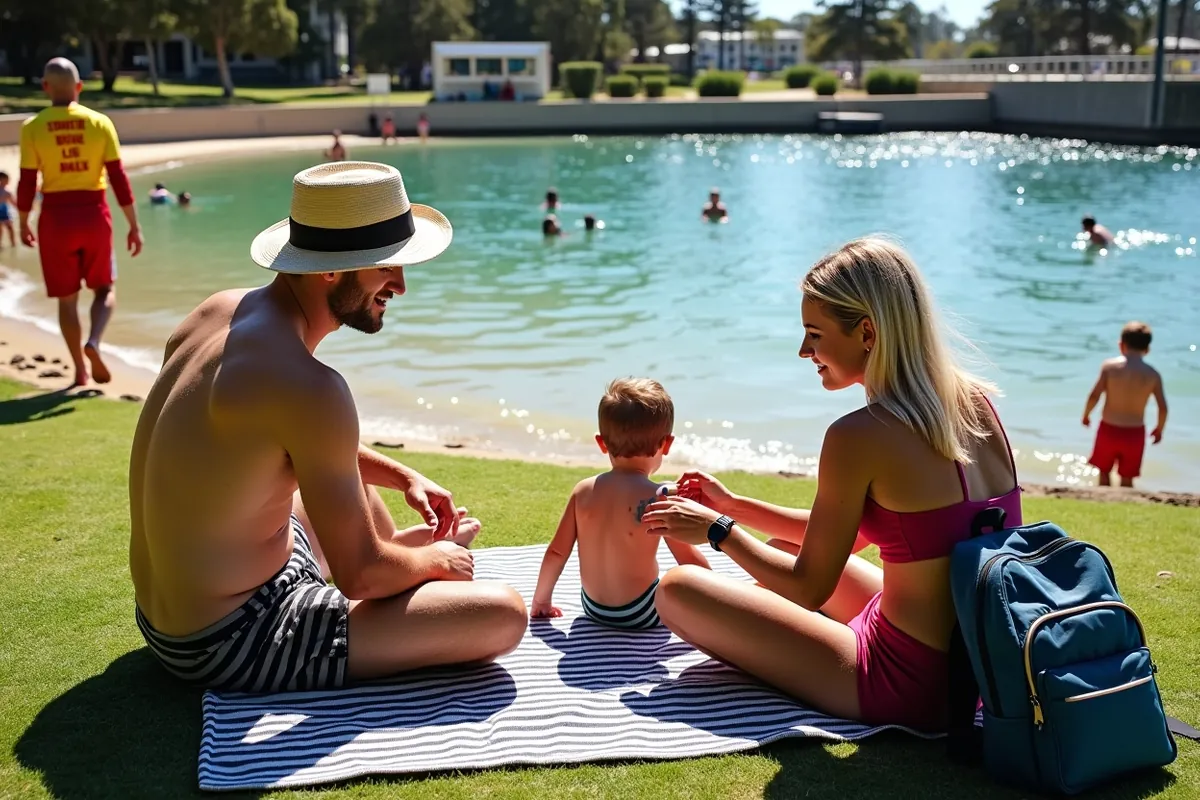
Covering clothing is often the simplest solution for kids. A long-sleeved rashie and UV tights reduce exposed skin while providing sun protection, meaning you do not have to chase every square inch of skin with sunscreen.
Always have vinegar in your beach bag in northern Australia if the accommodation or beach does not already have it, as it is often recommended locally for certain jellyfish stings. Always follow local instructions, as first aid can vary between species.
- Swim where there are lifeguards and stay within the flags
- Choose lagoons or netted swimming areas if traveling in tropical regions
- Use covering UV clothing on children, especially in the water
- Teach children not to touch tentacles on the beach, even if they look dry
- Double-check signs every day, as conditions can change quickly
Sunscreen That Actually Lasts a Whole Australian Day
The Australian sun is aggressive even when it is cloudy, and the UV index can be high well outside of peak summer. For children, it is often better to have a routine based on clothing, shade, and shorter sun exposure, rather than hoping that one layer of sunscreen will suffice.
Invest in a wide-brimmed hat, well-fitting sunglasses, and a rashie as standard attire. Schedule beach time early in the morning or later in the afternoon, and make lunch breaks shade breaks with food and drinks.
Sunscreen should be water-resistant and applied generously, but expect that swimming, towels, and sand will wear it off. If you are traveling with small children, it is smart to have a separate small tube in the beach bag so you do not skimp when it is needed.
If a child gets red on their shoulders or nose on the very first day, reduce exposure immediately. In Australia, even a small sunburn can quickly become a multi-day problem.
Practical Tips Upon Arrival and at the Beach
Once you arrive in Australia, start by reading the beach signs before unpacking. Check for rip current warnings, stinger information, and where first aid is located.
Also, note that some beaches have strong currents even when the water looks calm. For families, it is often better to choose a shorter, safer swimming period at a patrolled beach than a longer day at a remote beach without supervision.
If you are combining beach time with a road trip, ensure the car always has water, extra clothing, and cooling options for snacks. Along many Australian coasts, it can be a long way between shops, and children can quickly tire in the heat.
Documents That Can Affect Family Travel
Australia has electronic entry permits for many travelers, and incorrect information can create unnecessary stress even before departure. At VIZA.se, you can check exactly what documents are required for your trip.
If you are traveling with children who have different last names or if one parent is traveling alone with the child, it may be wise to carry a consent letter in English and relevant documents, especially during transit and entry.
A Final Tip That Makes a Difference
Family-friendly beaches in Australia are rarely about the most famous beach, but rather about the most controlled environment for your day. Choose patrolled, choose sheltered, and incorporate shade and clothing into your plan to make both swimming and photos better.