 Sverige

Ready to apply for a visa to Sverige?
Start your order online in a few minutes. We guide you step by step until your Sverige visa is ready.
Order Sverige visa2,000+ approved applications
A Surprising Fact for Many Hikers in Sweden
SMHI describes how the mountains can experience rapid weather changes. In practice, you can encounter sun, strong winds, and rain all in the same day, even in the middle of summer. This is why layering is not just a style choice in Sweden; it is your most important safety margin.
Preparing at Home with Swedish Conditions in Mind
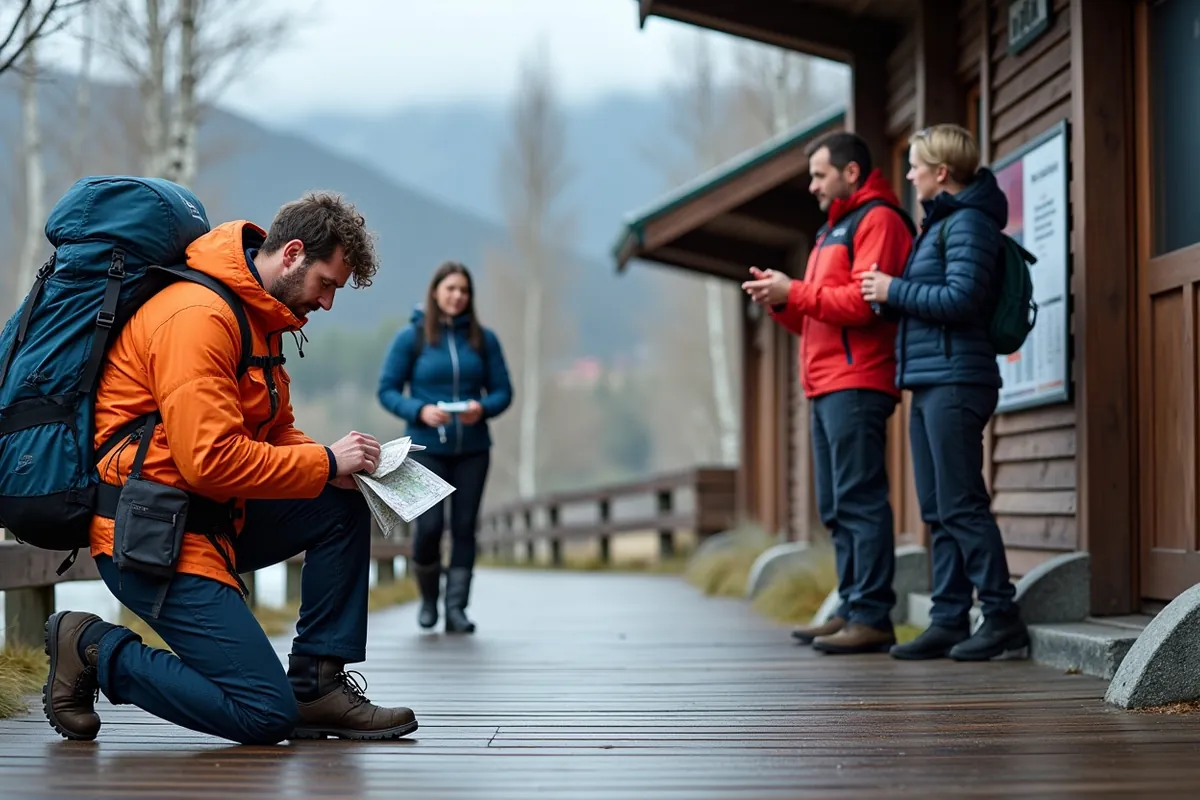
Start by choosing your area and season, then pack backwards based on what the trail actually requires. Mountain stations and STF cabins can provide a false sense of security, as between stages you are often far from shelter, and mobile coverage can vary.
Check the mountain weather for the locations you will pass, not just for the nearest town. SMHI has mountain forecasts, which are more relevant than a standard forecast for Kiruna or Östersund.
Also, plan for the mosquito season. In large parts of the mountains and forested areas, mosquitoes and gnats can be most intense from late June to early August, especially near wetlands and still waters.
The Layering Principle That Works in Swedish Mountains
The idea is simple: you should be able to regulate warmth and moisture without changing your entire outfit. In the Swedish mountains, the problem often lies in the combination of wind and moisture, not extreme cold.
Base layers should wick away sweat. Merino or synthetic materials work, while cotton does not when temperatures drop and the wind picks up.
Mid-layers provide warmth when you stop and can be a thin fleece or a lightweight insulated jacket. In the mountains, breaks are often when you get cold.
Outer layers should block wind and rain. Choose a shell jacket and shell pants that you can actually bear to wear, as they often end up on your body when the weather turns.
Opt for a thinner mid-layer and a good shell jacket rather than a thick sweater that gets wet and is hard to dry in the Swedish mountains.
Applications and Regulations That Affect Packing in Sweden
For hiking in the Swedish mountains, “application” rarely refers to permits, but you need to adhere to Swedish regulations and local ordinances. In national parks, there may be specific rules for camping and fires, and in nature reserves, there may be fire bans even when it feels wet.
The Right of Public Access offers great opportunities, but it requires consideration. The Swedish Environmental Protection Agency summarizes the principle as not disturbing and not destroying, which affects what you bring, especially regarding toilets, waste, and fire.
If you are a foreign traveler needing travel documents for entry, the entire application process is described step by step on VIZA.se. For the mountain trip itself, however, it is your route choices and equipment that determine how smooth the journey will be.
Pack Smart with Weight and Moisture as Main Enemies
In Sweden, it is common to wear both rain gear and mosquito protection at the same time. This means that ventilation and fit matter more than at home in the city.
Keep your packing waterproof. A rainy day in the mountains can last for hours, and a backpack cover is not always enough when it is windy.
Use waterproof packing bags or a heavy-duty garbage bag as a liner in your backpack. If you only do one thing, make sure your sleeping bag and dry base layers are protected.
Effective Mosquito Protection in Sweden
Insect repellent is only half the solution. In the mountains, it often becomes more effective to create a physical barrier, especially in camp when you are standing still.
A mosquito hat or net is lightweight and highly effective. Long sleeves and long pants made of tightly woven fabric can be more comfortable than dousing yourself in spray.
When choosing a repellent, read Swedish recommendations and labels. Some prefer DEET, while others opt for Icaridin, both of which are sold in Sweden, but sensitive skin and the combination with sunscreen can be factors.
Bring a mosquito net even if the forecast looks calm. On windless evenings near water, the situation can change in minutes.
Shoes and Socks for Swedish Wet Areas
Many trails in Sweden have boardwalks, but you will still encounter wetland, snowfields early in the season, and rain that fills the path. Waterproof boots may feel secure, but they dry slowly if they get wet inside.
Lightweight hiking shoes dry faster, but require you to accept wet feet and work with socks. Regardless of your choice, bring at least one pair of dry sleeping socks that are never used in the boots.
The Airport and Travel Day Within Sweden
If you are traveling to starting points like Kiruna, Gällivare, or Hemavan, it is common to have several transfers. Pack so that critical items are in your carry-on if you are flying, such as a shell jacket, a dry base layer, and medications.
Sharp objects and gas affect how you pack. Gas canisters are generally not allowed on flights, so plan to purchase them in Sweden upon arrival, as gas is often available in sporting goods stores and at mountain stations.
Also, leave room for last-minute shopping. In mountain-adjacent towns, the selection can be limited, and prices may be higher than in larger cities.
Arrival in the Mountains and the First Hours on the Trail
When you arrive, do a quick systems check before you head out. Adjust your backpack, test the accessibility of your rain gear, and ensure that your mosquito protection is on top.
Fill up on water where it is reasonable. In the Swedish mountains, many drink from running springs, but the quality varies, and if you purify the water, you will have a more consistent routine.
Also, set a clear plan for breaks. The wind can make you cold immediately when you stop, so keep your mid-layer easily accessible.
Food, Fuel, and Swedish Prices to Consider
Freeze-dried and energy-dense food makes packing lighter, but it can be expensive. In Sweden, a freeze-dried meal often costs around 90 to 140 SEK depending on the brand and where you shop.
Fuel prices vary, and in mountain shops, gas can be more expensive than in larger towns. If you want to stick to a budget, buy gas and basic supplies before heading up.
Here is a quick overview of typical costs and weights that affect your packing choices.
| Equipment or Consumable | Typical Weight | Typical Price in Sweden | Comment for Mountain Hiking |
|---|---|---|---|
| Shell Jacket | 300 to 600 g | approx. 1200 to 3500 SEK | Wind and rain are standard in the mountains |
| Mosquito Hat or Net | 20 to 60 g | approx. 100 to 300 SEK | Often more effective than extra spray |
| Freeze-Dried Dinner | 120 to 180 g | approx. 90 to 140 SEK | Easy to carry, expensive per calorie |
| Gas Canister 230 g | 370 to 400 g | approx. 70 to 130 SEK | Buy on-site if you fly |
| First Aid Kit | 150 to 300 g | approx. 150 to 500 SEK | Tailor to blisters and minor wounds |
On-Site Tips to Make Swedish Mountain Hiking Easier
On the trail, small details matter. Keep moisture in check, protect yourself from insects, and build routines that work even when you are tired.
- Pack rain gear and mosquito protection on top so you can reach them without emptying your bag.
- Have a waterproof bag for dry sleeping clothes and electronics.
- Change into dry socks immediately at camp, even if your shoes are still wet.
- Use a hat or buff even in summer, as the wind cools quickly.
- Double-check local fire regulations before assuming you can make a fire.
When camping, choose your spot thoughtfully. A little elevation and airflow can reduce mosquito pressure, but avoid exposed backs where the wind can be stronger than the forecast suggests.
Take care of waste according to Swedish rules. Many mountain areas lack trash bins, and what you carry in, you carry out.
If you want an analog backup, save a map from Lantmäteriet or your trail app as a PDF before you lose coverage. In the mountains, battery life is often a bigger limitation than data.
When the Trip is Over and You Want to Make the Next One Even Better
Note what got wet, what was never used, and what was missing. Swedish mountain conditions are consistent in some ways; wind, moisture, and insects recur, but they hit differently depending on the route.
With the right weather layers and mosquito protection that is more than just a small bottle in your top pocket, you will have a trip that feels controlled even when the mountain shows its rapid changes.